Discover Austria
Overview
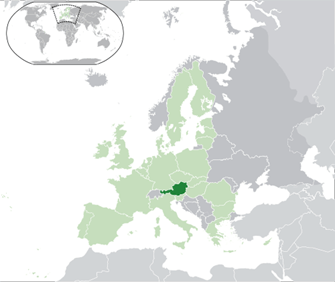
Austria is a landlocked country of approximately 8.95 million inhabitants in Central Europe. It is bordered by the Czech Republic and Germany to the north, Slovakia and Hungary to the east, Slovenia and Italy to the south and Switzerland and Liechtenstein to the west. The territory of Austria covers 83,878 square kilometres (32,385 sq mi) and has a temperate and alpine climate. Austria's terrain is highly mountainous due to the presence of the Alps; only 32% of the country is below 500 metres (1,640 ft) and its highest point the Grossglockner is 3,798 metres (12,460 ft). The majority of the population speaks German, which is also the country's official language. Other local official languages are Croatian, Hungarian and Slovene.
Autriche
Austria is a parliamentary representative democracy. The capital and largest city, with a population exceeding 1.9 million, is Vienna. Austria is one of the wealthiest countries in the world, with a nominal per capita GDP of $46,972 (2018 est.). The country has developed a high standard of living and in 2019 was ranked 18th in the world on the Human Development Index. Austria has been a member of the United Nations since 1955, joined the European Union in 1995 and is a founder of the OECD. Austria also signed the Schengen Agreement in 1995 and adopted the European currency, the euro, in 1999.
As a federal republic, Austria is comprised of nine independent federal states (also referred to as provinces): Burgenland, Carinthia, Lower Austria, Upper Austria, Salzburg, Styria, Tyrol, Vorarlberg and Vienna [1].
The origins of Austria date back to the time of the Roman Empire when a Celtic kingdom was conquered by the Romans in approximately 15 BC and later became Noricum, a Roman province, in the mid-1st century AD - an area which mostly encloses today's Austria. In 788 AD, the Frankish king Charlemagne conquered the area and introduced Christianity. Under the native Habsburg dynasty, Austria became one of the great powers of Europe. In 1867, the Austrian Empire was reformed into Austria-Hungary.
The Austro-Hungarian Empire collapsed in 1918 with the end of World War I. The First Austrian Republic was established in 1919. In the 1938 Anschluss, Austria was occupied and annexed by Nazi Germany. This lasted until the end of World War II in 1945, after which Austria was occupied by the Allies and its former democratic constitution was restored. In 1955, the Austrian State Treaty re-established Austria as a sovereign state, ending the occupation. In the same year, the Austrian Parliament created the Declaration of Neutrality which declared that the country would become permanently neutral [1,2].
Population
On January 1, 2020, 8 901 064 people were living in Austria according to final results of Statistics Austria. 316 138 people (~ +3.6%) more than at the beginning of 2015. As in previous years, the population growth could be mainly attributed to gains from international migration, while birth surpluses and statistical adjustments only made for comparatively small increases of the population figure [4].
Languages of Austria
The majority of the population speaks German, which is also the country's official language. It is the language used in media, in schools and formal announcements. The variety of German used, Austrian German is partially influenced by Austro-Bavarian and uses many “Germanized” words and expressions deriving from it.
The majority of the population speaks German, which is also the country's official language. It is the language used in media, in schools and formal announcements. The variety of German used, Austrian German is partially influenced by Austro-Bavarian and uses many “Germanized” words and expressions deriving from it.
Austro-Bavarian
The main native language of Austria outside Vorarlberg is Austro-Bavarian, which is spoken using many different dialects. The northern parts of Austria (including Vienna) speak Central Austro-Bavarian dialects and the southern parts Southern Austro-Bavarian dialects. Austro-Bavarian differs heavily from high German, making it hard for German speakers of different regions to understand the native population.
Alemannic
Alemannic is spoken in Vorarlberg. Vorarlberg uses a High Alemannic, the same dialect group as that spoken in Northern Switzerland (outside Basel) and parts of southern Alsace, France. To most Germans and Austrians outside of Vorarlberg it is very difficult to understand, as it is more similar to Swiss German, with many grammatical and pronunciation differences.
Minority languages
A number of minority languages are spoken in Austria, some of which have official status.
Serbian: is the largest minority language, with usage by 2.4% of Austrians.
Turkish: is the second minority language, spoken by some 2.3% of the population.
Burgenland Croatian: Burgenland Croatian, an official language in Burgenland, is spoken by 2.5% of Austrians and Burgenland Croats are recognized as a minority and have enjoyed special rights following the Austrian State Treaty (Staatsvertrag) of 1955.
Hungarian: While little spoken today, Hungarian has traditionally held an important position in Austria (or, more correctly, Austria-Hungary). Today, Hungarian is spoken by around 20,000 people (.05% of the Austrian population) in Burgenland.
Slovene: an official language in Carinthia, is spoken by 0.3% of Austrians. Carinthian Slovenes are recognized as a minority and have enjoyed special rights following the Austrian State Treaty (Staatsvertrag) of 1955.
European Charter for Regional or Minority Languages
Austria ratified the European Charter for Regional or Minority Languages on 28 June 2001 for the following languages in respect of specific Länder
Croatian of Burgenland
Slovene (in Carinthia and Styria)
Hungarian (in Burgenland and Vienna)
Czech (in Vienna)
Slovak (in Vienna)
Romani (in Burgenland)
Ethic groups
The Austrian Federal Constitution calls for the respect and promotion of ethnic groups resident in Austria. Special rights for Croatian (around 30,000), Slovenian (13,000 to 40,000 Slovenes in the Austrian state of Carinthia), Hungarian, Czech and Slovak ethnic groups and for Roma are established in the Ethnic Group Act [Volksgruppengesetz] of 1976 and a number of other laws and regulations.
The rights of the Croatian and Slovenian ethnic groups are also set forth in the State Treaty of Vienna (1955).The Slovenes in the Austrian state of Styria (estimated at a number between 1,600 and 5,000) are not recognised as a minority and do not enjoy special rights, although the State Treaty of 27 July 1955 states otherwise. The Ethnic Groups Act of 1976 only recognises members of indigenous (autochthonous) ethnic groups, a term that applies to Austrian citizens whose families have been living in Austria for at least three generations [5].
Climate
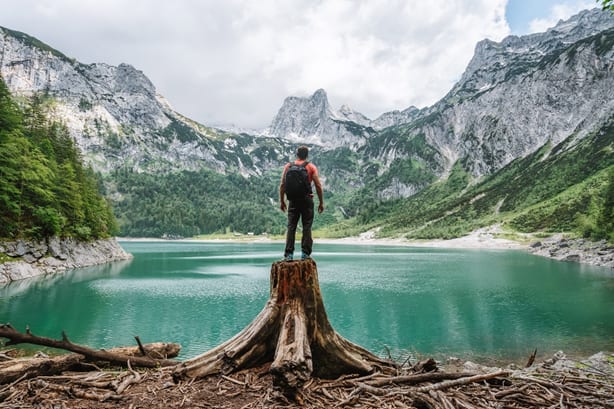
Austria, located in the European heartland, lies within a temperate climatic zone. Austria’s landscapes include major and minor mountain ranges, hills and plains.
Weather conditions vary only slightly across the country, the lowland regions in the north and east have more continental influenced conditions with colder winters and hotter summers with moderate precipitation throughout the year. The southeastern areas of Austria have longer and warmer, almost Mediterranean-like summers.
In the western part of the country the influence of the temperate Atlantic climate is felt more strongly. Consequently, this part is subject to less extreme weather conditions; winters are usually mild and summers rather warm. The west is also characterized by high precipitation. The diversity of topographical and climatic conditions results in a very versatile flora and fauna.
The geographic features in the more mountainous regions of the country have given rise to yet another climate zone, the Alpine climate, which causes winters to be colder than at lower altitudes. Temperatures depend largely on altitude, with averages 41 degrees Fahrenheit (5 degrees Celsius) lower for each additional 985 ft (300 m) of elevation. The country’s highest mountain is the Grossglockner (3,797m or 12,457 ft). Be aware that whatever the season, if you're at a high altitude, the weather can change quickly and dramatically.
Temperatures
The coldest month in Austria is usually January. The winter snow cover lasts from late December through March in the valleys, from November through May at about 5,905 ft or 1,800 m and becomes in many years permanent above about 8,202 ft or 2,500 m. Temperatures begin to rise again in February. In March, temperatures may rise up to 54 degrees Fahrenheit (12 degrees Celsius). Summers can be hot, with temperatures sometimes reaching 86 degrees Fahrenheit (30 degrees Celsius) or more (maximum temperatures revolve around around 95 degrees Fahrenheit or 35 degrees Celsius in July). Summer evenings are usually cool.
History overview
ANTIQUITY
The Alpine lands and the fertile plains of the Danube Valley had already been settled in prehistoric times. Rich deposits of mineral resources, especially salt and iron, facilitated the development of a prosperous Celtic population, which by the 1st century BC had become an important trading partner of the neighbouring Roman Empire. Around the time of the birth of Christ, this Noric kingdom was absorbed by the Romans and became an imperial province along with the other parts of present-day Austria that had been conquered and subdued at the same time: Rhaetia (western Austria) and Pannonia (eastern Lower Austria and Burgenland).
The Romans ruled over the region by the Danube for almost 500 years and founded numerous settlements. Yielding to the onslaught of tribal migrations, the Romans eventually withdrew from the Danube region abandoning their once-flourishing cities, such as Carnuntum in Pannonia.
Until the end of the 8th century, waves of migrants continued to flood across the area of present-day Austria: Germanic peoples crossed the Danube, while Hunnic horsemen from the east pressed as far westward as France. Later, eastern Austria was settled by the Avars and Baiuvarii from the southern German area advanced along the Danube. Slavic peoples settled in northern Lower Austria, Carinthia and in southern Styria.
At the end of the 8th century, Charlemagne established the Carolingian East March between the rivers Enns, Raab and Drau (Drava) as a bulwark against further Avar advance. The Alpine region had gradually been christianized by Irish and Scottish monks by the end of the Roman period.
THE MIDDLE AGES
When the Babenbergs, a Bavarian noble family, were entrusted with the administration of the region in 976, Austria was still rather sparsely populated. With a clear sense of purpose the Babenbergs expanded their power in the centuries that followed and with skillful marital policies they became one of the empire’s leading families. In 1156, Austria was elevated to the status of a duchy and was granted important privileges. By the time the last male Babenberg died in the mid-13th century, the dynasty had significantly expanded their dominion.
Following the brief interregnum of the Přemysl ruler Otakar II, the Habsburgs, whose origins lay in Swabia, were enfeoffed with the Duchy of Austria in 1282. With great skill and sense of purpose they constantly expanded their sphere of influence, acquiring the duchies of Styria, Carinthia and Tyrol through contracts of succession and adding Gorizia and Istria (with Trieste) to the areas under their control. Duke Albert V, who had married the daughter of Emperor Sigismund, himself became the first Habsburg to wear the imperial crown, following the death of his father-in-law in 1437.
MODERN AGE
Over the centuries that followed Albert’s successors wore the crown of the Holy Roman Empire with only short interruptions. The House of Habsburg used skilful marital policies to expand its territory, adding Burgundy and the Netherlands and also ruling Spain. In 1522, the Habsburg dynasty was divided into a Spanish and an Austrian line and the latter also acquired Bohemia and Hungary when the last Jagiellonian king died in 1526. The 16th and 17th centuries were marked by conflict with the Ottoman Empire, whose vast armies advanced through Austria and were beaten off at the gates of Vienna twice. Having successfully pushed back the Ottoman expansion, Austria acquired additional territories, emerging as a great European power.
In the second half of the 18th century, Empress Maria Theresa and her son Joseph II introduced sweeping reforms that provided the basis for a modern administrative government. The changes brought about on the map of Europe by the French Revolution and the subsequent Napoleonic Wars led to the dissolution of the Holy Roman Empire and in 1806 Emperor Francis II renounced the Roman imperial crown. Two years earlier he had followed the lead of Napoleon and declared Austria an empire.
After suffering a number of crushing defeats in the course of the formation of the Italian state, the Habsburgs were forced to make concessions to a rising wave of nationalism. In 1867, Emperor Francis Joseph approved the establishment of the Dual Monarchy of Austria-Hungary. This multinational state collapsed after the First World War, not least because of the drive for independence among its numerous nationalities.
20TH CENTURY
As the surviving state of the former Dual Monarchy, Austria was proclaimed a republic in 1918, but it was difficult for this small nation to find its place in the new European order. In 1938 the country fell prey to the pressure of aggression by Hitler’s Germany and the unstable domestic political situation.
Until the signing of the Austrian State Treaty in 1955, the independent Republic of Austria, which had been set up in 1945 with the help of the Allied Forces, remained occupied by the four great powers: France, Great Britain, the Soviet Union and the United States. In 1955, the Austrian Parliament passed a constitutional law to guarantee permanent Austrian neutrality and in the same year the country became a member of the United Nations.
Over the decades that followed, Austria became a valued and important member of the European project, initially as a member of EFTA. Following many years of efforts to promote the European integration, Austria became a member of the European Union on 1 January 1995. It held the Presidency of the EU Council in 1998 and again in 2006.
Top places to visit in Austria
Austria is known for its iconic architecture, endless natural beauty and its mountainous Alpine surroundings - all equally impressive in their own right - making it a perfect vacation destination for travelers in search of a new adventure. Winter sports enthusiasts regularly visit the country to ski and snowboard on the Austrian slopes, but that doesn't mean the only worthwhile attractions are snow related! Matter of fact, Austria has some of the most incredible examples of historic architecture in all of Europe and a myriad towns and cities with their own unique cultural feel.
VISIT VIENNA
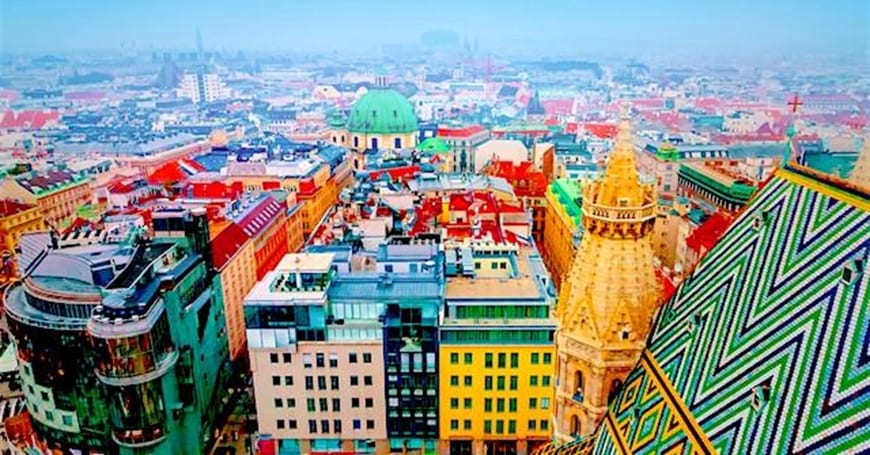
Vienna is widely considered to be a cultural haven for music, fine art and architecture lovers from all over the world. Known for the many diverse architectural styles peppered throughout the city, travelers can expect to find numerous well-preserved examples of Romanesque, Baroque, Classicist and Art Nouveau styled structures. Vienna is also celebrated for its rich performance-art tradition, hosting over 200 balls a year and a variety of classical music concerts honoring the many famous composers who once called Vienna home, including Mozart, Beethoven, Brahms and countless others.
VISIT VIENNA
Vienna is widely considered to be a cultural haven for music, fine art and architecture lovers from all over the world. Known for the many diverse architectural styles peppered throughout the city, travelers can expect to find numerous well-preserved examples of Romanesque, Baroque, Classicist and Art Nouveau styled structures. Vienna is also celebrated for its rich performance-art tradition, hosting over 200 balls a year and a variety of classical music concerts honoring the many famous composers who once called Vienna home, including Mozart, Beethoven, Brahms and countless others.
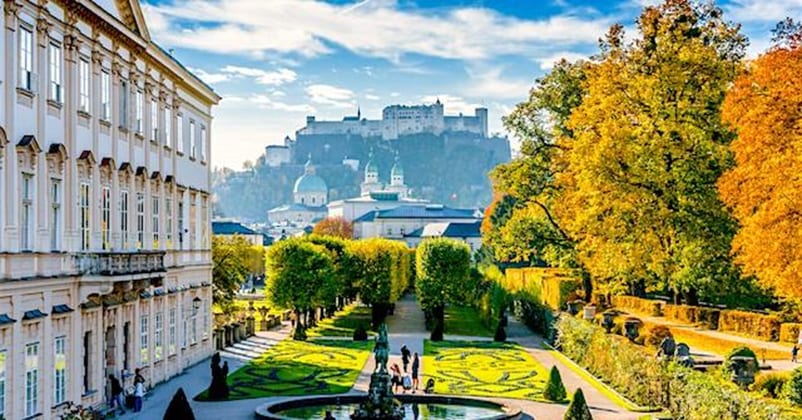
TOUR SALZBURG
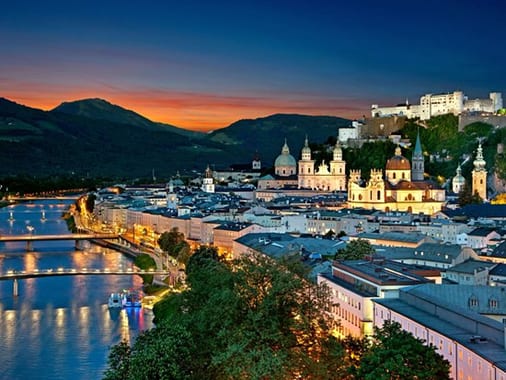
Situated near Germany's southern border with Austria, the city of Salzburg, like its capital counterpart, is famous for its long-standing musical traditions, including being the birthplace of Wolfgang Mozart. Beyond the many examples of historic architecture and artistic attractions found in the city, Salzburg is surrounded by the breathtakingly epic Alps mountain range, affording visitors and residents alike the ability to explore the experiential contrast of rich history and stunning natural beauty simultaneously.
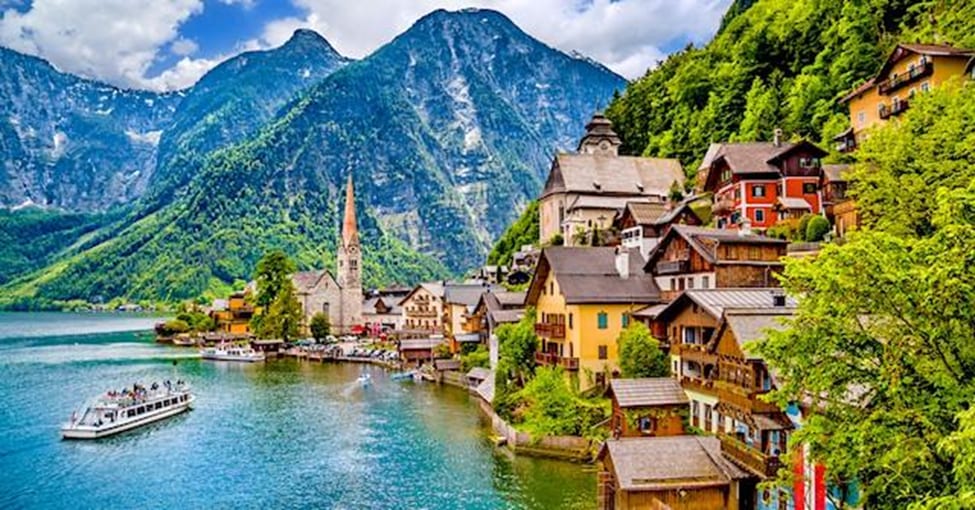
EXPLORE SALZKAMMERGUT
Salzkammergut - a UNESCO World Heritage Site - is an Austrian resort area surrounded by serene blue lakes, verdant hills and snow-peaked mountain ranges, that for over a century has served as one of the countries prime tourist destinations. Outdoor recreational activities are prominent in the area, including mountaineering, horseback riding, swimming and cycling. The Salzkammergut region is also famous for the many luxury spas and hotel resorts inhabiting the area, making it an idyllic destination for groups of travelers looking for both relaxation and adventure.
SEE MORE OF INNSBRUCK
Famous for hosting the Winter Olympics twice, in 1964 and 1976, the city of Innsbruck is widely considered to be one of the best winter sports destinations in the world. Visitors not so keen on skiing or snowboarding, or those visiting during the summer months can find plenty to do in the historic city as well, including exploring the Innsbruck Cathedral, the bell-making museum, or a number of local restaurants. One of Austria's most scenic cities, Innsbruck is nestled in the heart of the Alps.
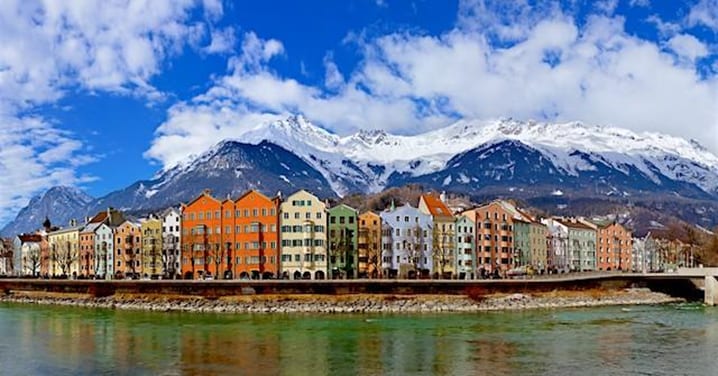
SPEND TIME IN ZELL AM SEE
For travelers who are looking for the ultimate in natural scenery and wilderness adventures, the town of Zell am See is a 'must-visit' destination in Austria. Surrounded by majestic alpine mountains, world-class ski slopes and tranquil blue lakes, Zell am See hosts numerous outdoor recreation events throughout the year, including a number ski and snowboard competitions. The driving here is also out-of-this-world, be sure to take the Grossglockner Alpine Road from here for some of the most awe-inspiring scenery in the country [7].
Sources
1 The history of Austria: a brief introduction | Expatica
2 http://wko.at/statistik/eu/europa-BIPjeEinwohner.pdf
3 http://hdr.undp.org/en/countries/profiles/AUT
4 https://www.austria.org/overview?msclkid=f2eb8a4fb38211ec815eebc062acbcbd
5https://www.statistik.at/web_de/statistiken/menschen_und_gesellschaft/bevoelkerung/index.html
6 The climate and seasons in Austria: a guide | Expatica