Discover Romania
Location
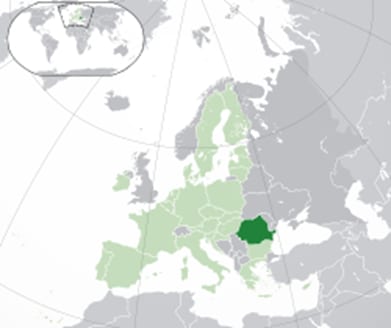
Romania is located in the Eastern part of Europe. It is bordered by: Hungary, Ukraine, Moldova, Bulgaria and Serbia and the Black Sea. Source: Wikipedia
Capital City
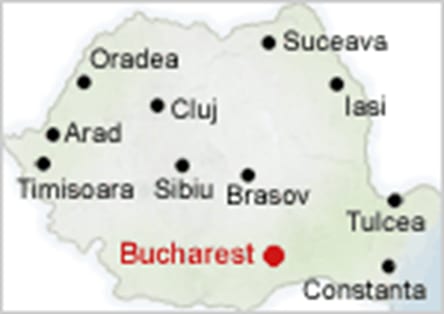
Bucharest is the capital and largest city of Romania, as well as its cultural, industrial and financial centre. It is located in the southeast of the country.
Romanian legend has it that the city of Bucharest was founded on the banks of the Dambovita River by a shepherd named Bucur, whose name literarily means "joy." His flute playing reportedly dazzled the people and his hearty wine from nearby vineyards endeared him to the local traders, who gave his name to the place. (source: Romaniatourism.com)
The exquisite Athenaeum is the majestic heart of Romania’s classical-music tradition. Scenes from Romanian history are featured on the interior fresco inside the Big Hall on the 1st floor; the dome is 41m high. A huge appeal dubbed ‘Give a Penny for the Athenaeum’ saved it from disaster after funds dried up in the late 19th century. Today it’s home to the George Enescu Philharmonic Orchestra and normally only open during concerts, but you can often take a peek inside. (source: the lonelyplanet.com)
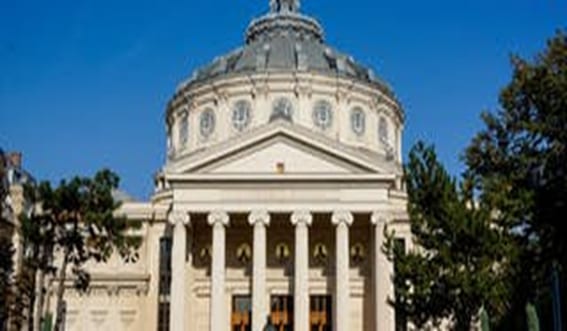
Romanian Athenaeum, Bucharest, (image by Monica Suma, source: the lonelyplanet.com)
The Palace of Parliament is the world’s second-largest administrative building (after the Pentagon) and former dictator Nicolae Ceauşescu’s most infamous creation. Started in 1984 (and still unfinished), the 330,000-sq-metre building has more than 3000 rooms. (source: the lonelyplanet.com)
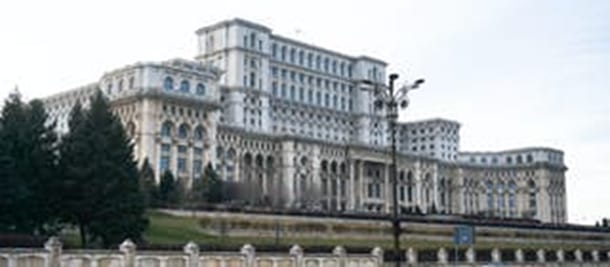
The Palace of the Parliament, Bucharest (image by Monica Suma, source: the lonelyplanet.com)
Flag
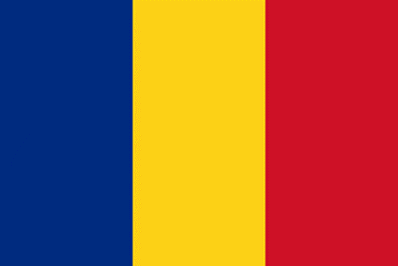
The Constitution of Romania states that "The flag of Romania is tricolor; the colors are arranged vertically in the following order from the flagpole: blue, yellow, red".
Territory
The area of Romania is 238,397 km2 (92,046 sq mi)
Population
Romania is the twelfth-largest country in Europe and the sixth-most populous member state of the European Union with a population of 19 million.
Climate
Romania has a temperate-continental climate with moderate features which is characteristic for Central Europe, with hot summers, long, cold winters and very distinct seasons. Abundant snowfalls may occur throughout the country from December to mid-March, especially if you are in the mountainous areas of Romania. (source: weatheronline.co.uk)
Language
Romanian is a Romance language, belonging to the Italic branch of the Indo-European language family, having much in common with languages such as Italian, Spanish, French and Portuguese.
Compared to the other Romance languages, the closest relative of Romanian is Italian. However, Romanian has had a greater share of foreign influence than some other Romance languages in terms of vocabulary and other aspects. (source: Wikipedia).
Famous people
Source: the culturetrip.com and Wikipedia.com
Constantin Brâncuși
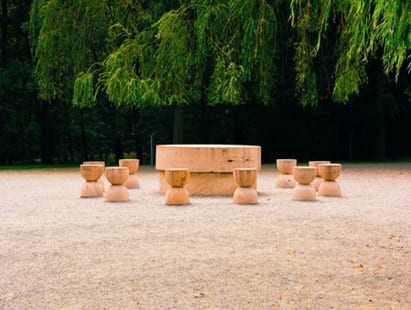
Very popular among the French, Constantin Brâncuși’s workshop can be visited in Paris. One of the pioneers of the modern sculpture, he started his studies in Romania at the Arts School in Craiova and then at the National Art University in Bucharest, but his journey took him to France, where he studied at the Paris Academy of Beaux Arts. He is considered one of the most influential sculptors of the 20th century, appreciated not only in Europe but also in the United States. You can admire his works in the Romanian city of Târgu Jiu, as well as in the Brâncuși Studio in Paris, part of the Georges Pompidou Centre.
Marcel Iureș
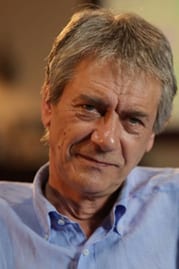
A Romanian actor with a national and international portfolio, Marcel Iureș is among the most praised stage and screen actors in Romania. The projects he has been involved in gave him the opportunity to act alongside George Clooney in the movie The Peacemaker, Tom Cruise in Mission Impossible, as well as Brad Pitt in Interview with the Vampire.
Cristian Mungiu
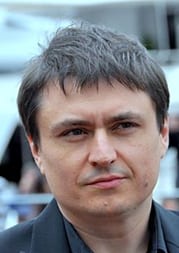
Cristian Mungiu is a Romanian filmmaker. He won the Palme d'Or at the 2007 Cannes Film Festival for his film 4 Months, 3 Weeks and 2 Days, which he wrote and directed. He has also won the awards for Best Screenplay and Best Director, at the 2012 and 2016 Cannes Film Festivals, for his films Beyond the Hills and Graduation.
Angela Gheorghiu
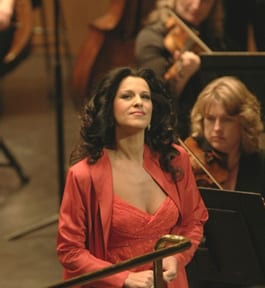
A marvellous opera singer, the soprano Angela Gheorghiu is among the most distinguished artists in the world. Her leading-role performances took her to the Metropolitan Opera of New York, London’s Royal Opera House and Vienna State Opera. She won several awards including the 2004 Victoires de la musique classique award for the best opera recording for Carmen, as well as the 2010 Female Artist of the Year at the Classic Brit Awards.
Mircea Eliade
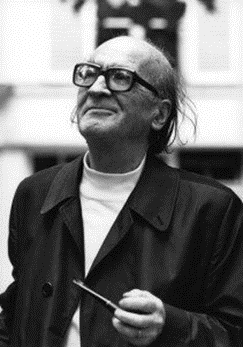
Author of the outstanding “A History of Religious Ideas”, Mircea Eliade was a Romanian historian of religions, fiction writer and philosopher. He studied at the Bucharest University and at the University of Calcutta. While in India, he fell in love with his hosts’ daughter and then wrote a fictionalised account in the novel Maitreyi, screened in the movie The Bengali Nights. After living in Romania and France he moved to the United States, where he became a professor at the University of Chicago, teaching the history of religions. Nowadays, the Department of History of Religions bears his name, as an honour for his vast contribution to the specialised literature on the matter.
George Enescu
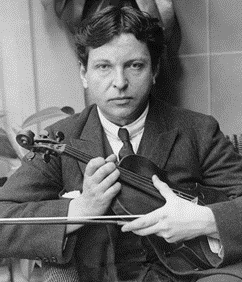
The one French people call Georges Enesco, the Romanian composer, pianist, violinist and conductor is considered Romania’s most important musician. At seven years old he started composing and at 10 years old he gave a private concert at the Court of Vienna in presence of Emperor Franz Joseph. He lived in Romania, Austria and France and he was described by Catalan composer Pablo Casals as ‘the greatest musical phenomenon since Mozart’. In his honour, his former residence was transformed in the George Enescu Museum and every year the George Enescu Festival brings to Bucharest world-renowned classical music.
Eugène Ionesco
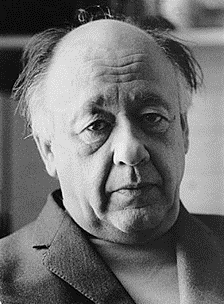
Known to Romanians as Eugen Ionescu, the Romanian-French playwright is one of the most remarkable figures of the French avant-garde theatre. Capturing in his pieces the meaningless of the existence, Ionesco is one of the greatest writers of the Theatre of the Absurd. In 1970, he became a French Academy member, being the first Romanian writer gifted with such a distinction.
Simona Halep
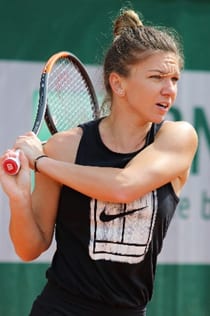
Simona Halep is a brilliant Romanian professional tennis player. After the 2017 Wimbledon Championships, she became the player with the most consecutive weeks within the Top 10 of WTA. She is also the first Romanian player to reach the first place in the WTA, after defeating Jelena Ostapenko at the 2017 Beijing Finals.
Interesting facts
Source: Romania-insider.com, rolandia.eu , artefactmagazine.com and www.visit-romania.com
Ia, la blouse roumaine
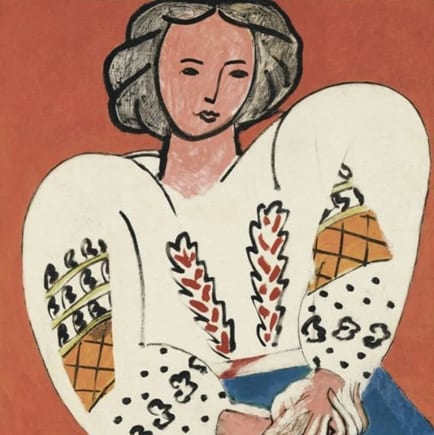
Ia, the Romanian blouse, is an important item of clothing within the traditional folk costume worn by women and celebrated on June 24 every year on the International Day of the Romanian Blouse. Nicknamed the Carpathian shirt or the Dacian shirt, its origins go a long way back to the ancient Dacian civilization. In fact, the Romanian blouse was depicted on various bas-reliefs dating 2000 years ago. In modern times, specialists view it as the Romanian people’s contribution to the diversity of European clothing.
Besides the typical cut and wide sleeves, the Romanian blouse is embellished with embroidery in natural colors, harmoniously combined. Over time, it has been worn by peasants, artists and royalty alike. Moreover, the Romanian blouse has inspired distinguished artists such as Henri Matisse who painted the famous La Blouse Roumaine. (photo).
Over time, the beauty of the carefully handmade embroidery of peasant blouses captured the attention of big names in the fashion industry.
Yves Saint Laurent was the first designer to introduce the Romanian blouse in his collection in 1981.
He was followed by Oscar de la Renta in the early 2000s, Jean Paul Gaultier in 2006, Tom Ford in 2012 and Isabel Marant 2013. More recently, Anthropoligie has created a collection inspired by Southern Romania.
The “Merry cemetery”
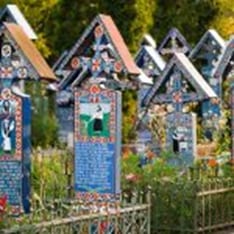
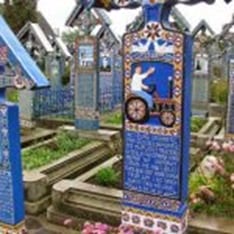
Death and joy are not two separate things for a small village in Maramures (Romania). Here, unique in the world, the wooden crosses are painted in vivid colors, showing scenes from the life of the defunct. More than that, on almost every tombstone you will find a witty poem.
Narrow Gauge Train Trips in Maramures - Romania
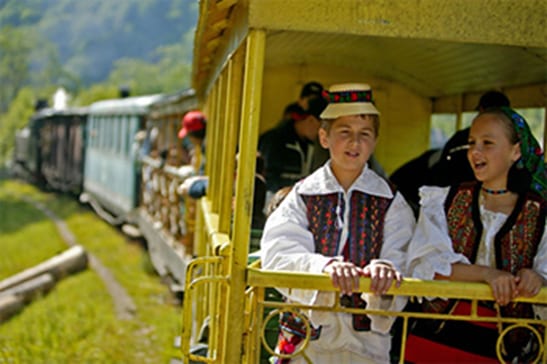
The narrow-gauge railway and the steam powered locomotives (Mocanita) in Viseu de Sus are one of the most remarkable railway heritage attractions in Romania and in Eastern Europe. It is the only remaining, working narrow gauge forestry railway of many that were constructed -in 1932 - to transport timber from the vast, remote forests of the Carpathian Mountains and their foothills.
Starting from Viseu de Sus - a small logging town in Maramures - the railway climbs the beautiful roadless Vaser valley for 31 miles, deep into the forests of the Maramures mountains to the tiny hamlet of Coman. Today, four steam-powered locomotives (the oldest one was built in 1910) are transporting logs, down and lumberjacks and visitors up and down the valley.
Decebalus, biggest rock sculpture in Europe
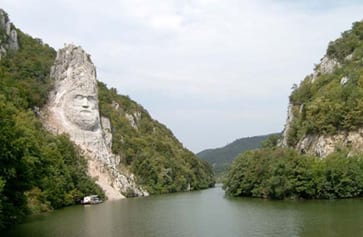
Also, in Romania you will find the largest rock sculpture in Europe: Decebalus, which represents the last king of Dacia. This is the highest stone carving in Europe, 42.9 m in height and 31.6 m in width. The man who had the idea of making this sculpture was the historian Iosif Constantin Dragan.
Vlad the Impaler
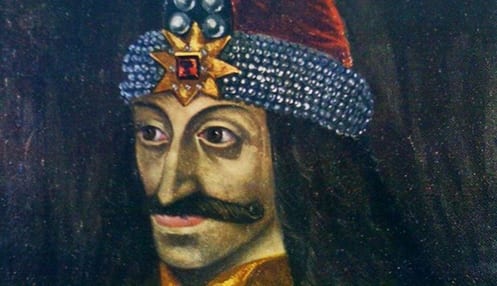
Vlad the Impaler probably was among the first things you learned about Romania. And this is not surprising considering that the voivode of Wallachia was the source of inspiration of a fictional character in Dracula novel by the Irish writer Bram Stoker. Of course, history and fiction are two different things, but no one really knows where the legend ends and the history begins.
The name of Dracula has a connection with his father, Vlad Dracul, who was a knight in the Order of the Dragon, a Knight order from Eastern Europe aimed at stopping the expansion of the Ottoman Empire. The Dragon Order’s Blaze was a dragon (Ottomans) and a cross (a sign of Christianity) and Vlad Dracul wore this symbol. His second son was Vlad II - Dracula, the A letter at the end being a way of establishing affiliation - Dracul(a), the son of the Vlad Dracul. Of course, there was only one step in linking his name with „the evil”. More than that, because of his cruelty, his opponents told him „devil”.
Places to visit and things to do
Source: Romania-insider.com and touropia.com
Transylvania
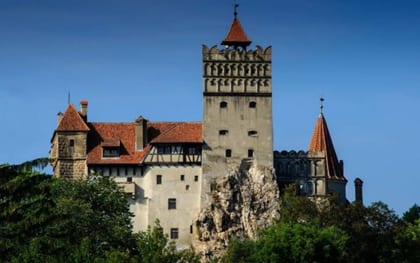
Transylvania is for sure one of the most famous regions on Romania, especially because of the stories linking it to the famous legend of Count Dracula. However, this region in central Romania is much more, being home to amazing landscapes and beautiful castles and cities.
The most well-known cities are Cluj-Napoca, Brasov, Sibiu, Oradea and Alba Iulia, but there are also smaller medieval towns that are very popular among tourists, such as Sighisoara, Medias or Sebes. As for the castles, the most famous is, of course, the Bran Castle in Brasov, which is also known as Dracula’s Castle. In fact, this castle is one of the most popular tourist destinations in Romania. But the Corvin Castle in Hunedoara, one of the largest castles in Europe, is also worth visiting.
The Carpathian Mountains
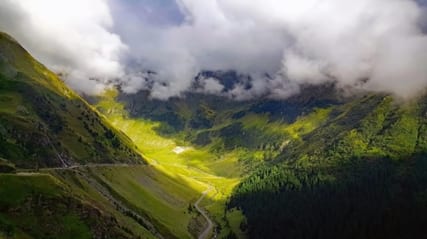
The Carpathians are the second-largest mountain range in Europe, providing the habitat for the largest European populations of brown bears or wolves, with the highest concentration in Romania. One of the wildest areas in Romania, the Carpathian Mountains are also home to some of the last remaining virgin forests in Europe.
Romania’s Carpathians are home to many species of animals, but the brown bears have always caught the people’s attention, especially because of the large population roaming the local forests. It is believed that there are over 200,000 brown bears in the world and estimates say that over 6,000 of them are living in Romania’s forests in the Carpathian Mountains: the largest population of bears in the European Union.
Sinaia
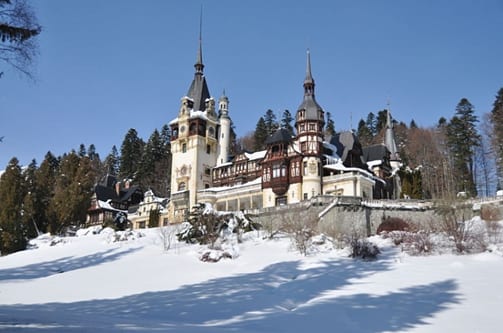
Sinaia is a mountain resort town that grew up around a monastery that was named for Mount Sinai. The monastery, which contains a copy of the first Bible printed in Romania, is a popular site today with tourists, who enjoy hiking in the summer and some pretty tremendous downhill skiing in the winter.
King Carol I built his summer home, known as Peles Castle, near here; it also is a popular tourist attraction. The town is noted for having pretty flowers, but visitors who pick them can find themselves in hot water, as this is not allowed.
The Danube Delta
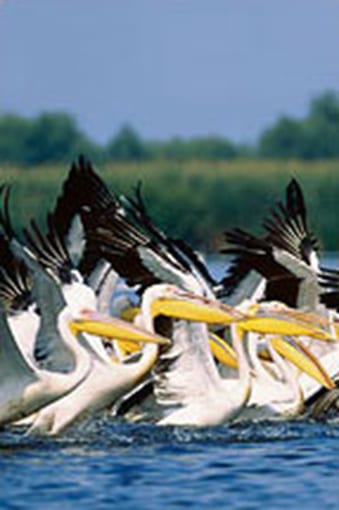
The Danube Delta is a perfect spectacle of nature in Romania with more than 360 species of birds and 45 species of freshwater fish. Also, important to mention is that The Danube Delta is the second largest and best-preserved of the European deltas. The Danube Delta entered UNESCO World Heritage in 1991.
Formed over a period of more than 10,000 years, the Danube Delta continues to grow due to the 67 million tons of alluvia deposited every year by the Danube River.
The Delta is formed around the three main channels of the Danube, named after their respective ports: Chilia (in the north), Sulina (in the middle) and Sfantu Gheorghe (in the south).
The Danube Delta Biosphere Reserve has the third largest biodiversity in the world (over 5,500 flora and fauna species), exceeded only by the Great Barrier Reef in Australia and the Galapagos Archipelago in Ecuador.
Painted Monasteries (Bucovina)
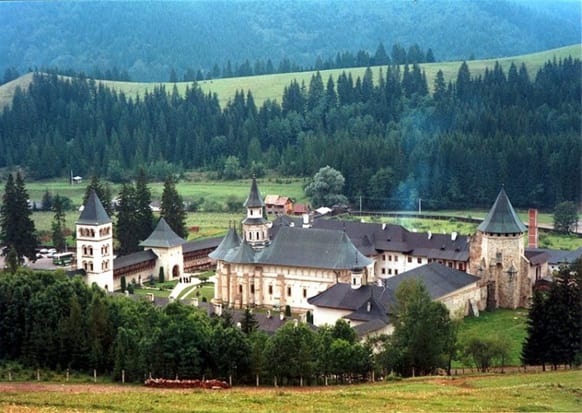
Among the most picturesque attractions of Romania are the Painted Monasteries of Bucovina in the northeastern part of the country. Their painted exterior walls are decorated with elaborate 15th and 16th century frescoes featuring portraits of saints and prophets, scenes from the life of Jesus, images of angels and demons and heaven and hell. The best-preserved are the monasteries in Humor, Moldovita, Patrauti, Probota, Suceava, Sucevita and Voronet.
Famous dishes
Sources: rolandia.eu, visitbucharest.today
The central characteristic of the Romanian cuisine is its great variety. It is a cuisine influenced by repeated waves of different cultures: the ancient Greeks, with whom Romanians traded; the Romans, who gave the country its name; the Saxons, who settled in southern Transylvania; the Turks, who for centuries dominated Romania; as well as Slavic and Magyar neighbors. All of these influences gradually blended into the varied and delicious Romanian culinary tradition" (Nicolae Klepper - Taste of Romania)
Sarmale (Cabbage Rolls)
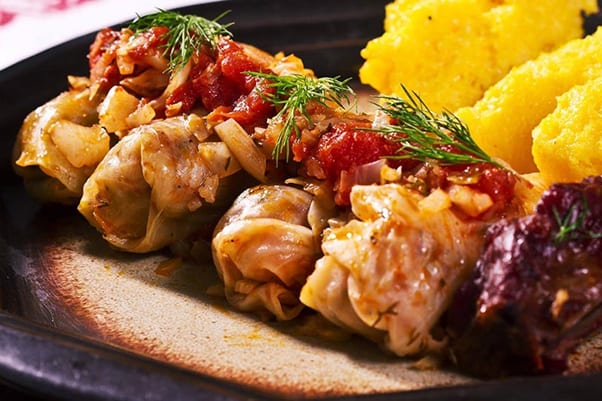
Considered to be Romania's national dish, these stuffed cabbage rolls are actually of Balkan origins.
They are a culinary preparation of minced meat (usually pork, but also beef, sheep, poultry, or even fish), mixed with rice and other ingredients, wrapped in rolled cabbage leaves. They are usually served with polenta and cream.
Ciorba de burta ( Tripe Soup)
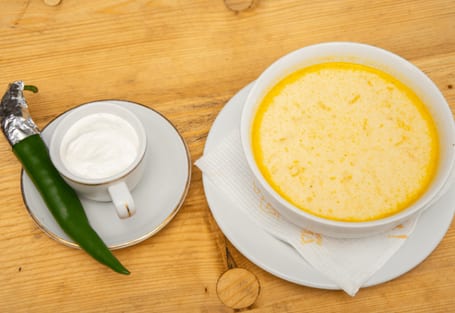
Tripe soup is a beef soup based on vegetables: carrots, guillemots, celery with beef stew to which is added the main ingredient: beef tripe cut into strips.
MICI (Skinless Sausages/Little Ones)
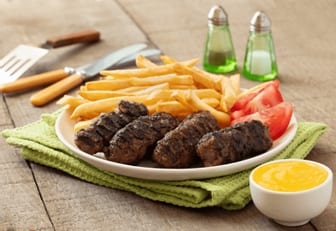
Romanian MICI is normally made from a mix of beef, pork and lamb as well as spices that may include garlic, black pepper, thyme and coriander.
SARAMURA DE CRAP (Carp brine)
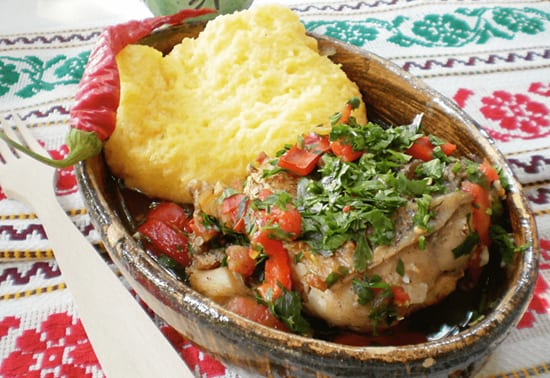
SARAMURA DE CRAP (Carp brine) is a delight. A delicious sauce made from hot peppers, tomatoes, dill, pepper and bay leaves. Carp completes the taste and the polenta is the final note.
Transylvanian Treats: One Sweet "Cylinder"
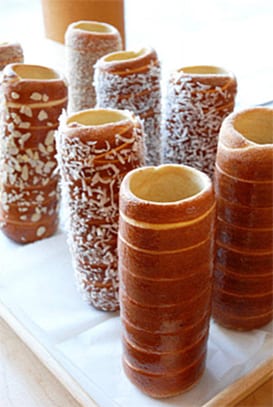
A long rope of sweet yeast dough is tightly wrapped in a spiral around a wooden form, something like a rolling pin,and dusted with sugar.It is then baked, slowly turning, on a rotating spit above an open flame. Carefully edged off its wooden mold after baking, each chimney cake is a whimsical-looking, soft bread with an addictively crunchy caramelized sugar crust and an airy open center.
References
- Romaniatourism.com
- thelonelyplanet.com
- the culturetrip.com
- Wikipedia.com
- weatheronline.co.uk
- Romania-insider.com
- rolandia.eu
- artefactmagazine.com
- touropia.com
- visitbucharest.today
Resources to visit
- Romaniatourism.com
- https://www.lonelyplanet.com/romania
- visit-romania.eu
- Back to navigation